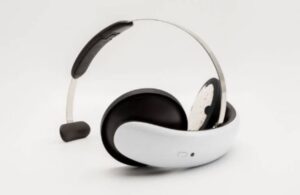
The company says it marks the first FDA approval for a system that gives clinicians the option to prescribe a novel, at-home, non-drug therapy as both a standalone and adjunctive treatment for adults with moderate-to-severe depression.
Flow uses transcranial direct current stimulation (tDCS). This compares to fellow neurostimulation for depression developers, BrainsWay and MagStim, for example, who develop their own transcranial magnetic stimulation technology that treats depression in the clinic.
The Flow at-home neurostimulation device (FL-100) applies a gentle electrical current to the prefrontal cortex. This part of the brain — involved in mood regulation and stress response — is often underactive in people with depression, the company said.
“We’re on a mission to make effective, affordable non-drug treatment available to the millions of Americans suffering from depression,” said Erin Lee, CEO of Flow Neuroscience. “Flow’s FDA approval is a watershed moment for the treatment of depression: the first step in moving from pharmaceutical treatments to tech-based therapies with minimal side effects.”
Flow uses transcranial direct current stimulation (tDCS). This compares to fellow neurostimulation for depression developers, BrainsWay and MagStim, for example, who develop their own transcranial magnetic stimulation technology that treats depression in the clinic.
More about the Flow Neuroscience depression treatment
Flow Neuroscience says more than 9,000 publications and more than 25 years of clinical research backs its method.
To prove its effectiveness, the company published a landmark randomized controlled clinical study in Nature Medicine. It demonstrated that the FL-100 tDCS device delivered symptom reductions as early as three weeks. Findings revealed a clinically meaningful response to treatment with generally mild and transient reported side effects.
Active tDCS treatment not only outperformed sham stimulation but also achieved higher (2-3 times) remission and response rates. More than half (58%) of patients were in remission by the end of the 10-week study.
“For more than six years since the device’s launch in Europe, we’ve been building an evidence base globally with clinical trials, peer-reviewed research, and real-world case reports,” said Daniel Månsson, co-founder and chief scientific officer of Flow Neuroscience. “The approval of FL-100 in the US will now offer millions of patients an accessible and effective non-drug treatment option.”
Flow Neuroscience reports more than 55,000 users in Europe, the UK, Switzerland and Hong Kong. Its system received FDA breakthrough device designation in 2022 but is now available to market in the U.S.
“We are committed to ensuring that Flow becomes a part of a standard treatment pathway for depression care,” Lee said. “We are singularly focused on helping as many patients as possible achieve remission from depression.”
The company expects to make the device available in the U.S. as early as the second quarter of 2026. It also plans to evaluate its system as a treatment for additional neuropsychiatric indications. Those could include traumatic brain injury, addiction and sleep disorders.