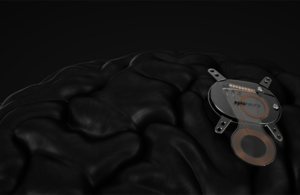
San Francisco-based Epia Neuro aims to restore independence for people living with neurological conditions. It has a proprietary neural interface platform under development. The company designed its BCI to translate brain signals into actionable commands. This could enable rehabilitation and assistive therapies for stroke survivors and individuals with cognitive decline.
Epia Neuro’s lead product, a dual-phase stroke therapy, aims to support both post-stroke recovery and long-term assistive living. It combines a minimally invasive, long-lifetime “read/write” BCI. The BCI features assistive devices and AI-drive support to turn neural intent into functional movement and daily independence.
The company expects to advance toward first-in-human demonstrations this year at the Dept. of Neurosurgery at Lenox Hill Hospital, New York.
“Epia Neuro was founded to restore meaningful function, provide real independence and ultimately provide the support individuals need to be fully present in their lives,” said Michel Maharbiz, CEO, Epia Neuro. “Over the past five years, our team has been building our first product: a system that interprets neural intent in real time and translates it into rehabilitation therapies and practical, everyday assistance. We’re starting with stroke and plan to rapidly expand into additional neurological conditions.”
More about Epia Neuro and its technology
The company said it engineered its interface for surgical scalability and long-term durability. The device can be implanted within the skull in under an hour without piercing the dura. This enables a procedure and clinical workflow designed from scratch for broad neurosurgical adoption.
Epia Neuro describes its system as discreet and externally invisible. Charged through a non-invasive headset, it offers long lifetime use and the possibility of a replacement or upgrade.
Unlike conventional, read-only neural interfaces, the company said its platform supports both sensing and stimulation, both at the cortex and deep in the brain. This enables compatibility with cortical stimulation and deep brain stimulation (DBS) approaches where appropriate.
Led by CEO Michel Maharbiz, a serial entrepreneur and founder of Iota Biosciences, the company’s leadership also features Chief Technology and Science Officer Gil Mandelbaum, a neuroscientist, and COO Michelle Patruno, an operations executive with more than 15 years of experience scaling high-growth organizations and building teams and systems to support sustainable growth.