enVVeno Medical (Nasdaq:NVNO) announced today that it received FDA investigational device exemption (IDE) for its enVVe system.
IDE allows Irvine, California–based enVVeno (formerly Hancock Jaffe) to begin the TAVVE pivotal trial for the system. It represents a first-in-class minimally invasive, non-surgical replacement venous valve for patients suffering from severe deep chronic venous insufficiency (CVI).
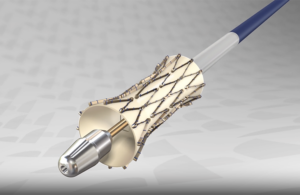
enVVe, a non-surgical valve, features a self-expanding nitinol frame. Its unique single-leaflet design — laser cut from porcine pericardium tissue — and a low-profile 13 Fr delivery system when crimped make up the rest of the small-profile valve.
The company expects its pivotal study evaluating the transcatheter valve to enroll approximately 230 patients at up to 40 U.S. sites. It also reported a new U.S. patent covering key components of the system, further strengthening its competitive moat.
enVVeno Medical announced these updates within its second-quarter financial results, which highlight approximately $21.5 million on-hand in cash and investments. Management believes this should fund operations into the third quarter of 2027. That includes the initiation of the TAVVE trial.
Advancing the enVVe system into the IDE trial marks a significant step for the company, which hit a speed bump in its venous valve development last year.
After submitting a premarket approval (PMA) application for VenoValve — its surgical replacement venous valve for treating severe deep chronic venous insufficiency (CVI) — in May 2025, the company received a not-approvable letter from the FDA three months later. The FDA cited insufficient data supporting the valve’s risk-benefit profile, plus safety concerns with the open procedure.
enVVeno Medical said at the time that the failed bid for VenoValve would inform the development process for enVVe.
Rob Berman, CEO of enVVeno Medical, said:
“The second quarter represented a defining milestone for enVVeno, as we got the approval to move forward with the pivotal study for enVVe, our non-surgical replacement venous valve. enVVe has the potential to completely change the treatment trajectory for the 3 million U.S. patients in the U.S. that suffer from severe, deep venous CVI and have no effective treatment options.
“As we enter the second half of 2026, our focus is squarely on executing the TAVVE pivotal study, getting our clinical sites up and running, and treating the first patients.”