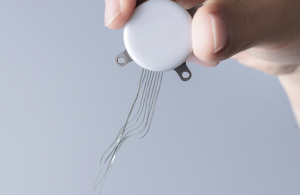
The announcement confirms reports last month that the company was set to bring in this funding.
Alibaba led the financing round for the brain-computer interface (BCI) developer. It also included participation from existing shareholders including Tencent, Fountainbridge Capital, OrbiMed, Oriza Seed, Qiming Venture Partners, Lilly Asia Ventures (LAV) and Source Code Capital. StairMed says it marks a “rare joint investment” from Alibaba and Tencent, two giant Chinese companies, in the BCI space.
The closing of the financing comes just over a year after the company raised $48 million in a February 2025 funding round. Its latest funding brings the company to more than RMB 1.1 billion ($160 million) in the past year, according to a news release.
With the financing, StairMed plans to accelerate the development of its technology platform and clinical programs. It hopes to build on three successful clinical implants of its BCI last year.
BCI in China continues to heat up, with ultrasound-based BCI company Gestala announcing $21.7 million in funding last month and news a day later of regulatory approval in the country for BCI technology from Neuracle.
More about the StairMed BCI technology
The company’s offerings include ultra-flexible neural electrodes that it says come in at a fifth of the size of BCI competitor Neuralink’s electrodes.
StairMed also claims that its material is significantly softer to offer a less intrusive option for brain tissue. The implantation procedure still requires drilling into the skull, which some BCI companies aim to avoid, like Synchron and its catheter-based procedure. StairMed develops robotic systems for the procedures.
Using ultra-flexible microelectrode technology, StairMed developed a closed-loop, ultra-low-damage deep brain stimulation (DBS) system.
The company expects to use its BCI for speech reconstruction, artificial hearing, facial palsy repair and spinal cord injury repair. In parallel, it continues to expand its neuromodulation portfolio. The company also expects to continue advancing its technology through the rapid growth of AI.
Earlier this year, the company used its proprietary surgical robot to complete the implantation of its 256-channel wireless high-throughput invasive BCI (WRS02). It successfully validated brain-controlled interaction functions in this effort. StairMed says it’s the only invasive BCI in China to receive access to the National Medical Products Administration (NMPA) Green Channel for Innovative Medical Devices.
Next, the company plans to initiate clinical development efforts, including large-scale clinical trials in mid-2026. It hopes to enroll and implant 40 patients within the year.
StairMed then expects formal clinical trials in 2027.
Li Xue, StairMed founder, said:
“We are grateful to our existing shareholders for their continued support since our early days, particularly Tencent as a core industrial investor. We also welcome Alibaba and SDIC Unity Capital to this round. BMI is not only an emerging medical technology, but also a point of convergence between life sciences and information technology. The deep expertise of these industry leaders in multi-modal large models, computing infrastructure, intelligent hardware, and ecosystem development aligns closely with StairMed’s strengths in BMI hardware and clinical translation. This partnership will enable us to co-develop next-generation intelligent BMI systems and cutting-edge application ecosystems. This is more than an investment in medical innovation—it is a strategic bet on the long-term potential of human-machine interaction.”