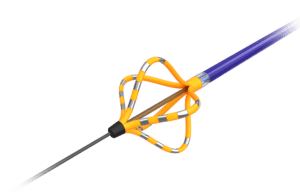
Studies backed the company’s key electrophysiology and cardiac rhythm management therapies, plus the Watchman FLX device. In addition to the LAAC device, the Marlborough, Massachusetts-based company shared data on its Farapulse PFA system, POLARx cryoablation system and the Emblem MRI subcutaneous implantable defibrillator (S-ICD).
Boston Scientific presented all data at Heart Rhythm Society’s (HRS) Heart Rhythm 2023 meeting in New Orleans.
“The data shared at this year’s Heart Rhythm meeting showcases the breadth and depth of our cardiology therapies, which spans from diagnosis to treatment of cardiac disease, and highlights the continued growth of our portfolio,” said Dr. Kenneth Stein SVP and global chief medical officer, Boston Scientific. “From preclinical data to real-world surveillance, data demonstrated positive outcomes for our Farapulse PFA System, the POLARx cryoablation system, the Emblem S-ICD system as well as our Watchman FLX LAAC device, and is evidence of our commitment to providing physicians with innovative technologies that make a meaningful impact on the lives of patients living with heart disease.”
Real-world data backs the Farapulse system
Boston Scientific presented real-world outcomes from the multi-center EU-PORIA registry for the Farapulse system. This registry demonstrated the safety, efficacy and learning curve characteristics of Farapulse.
In 2021, Boston Scientific acquired Farapulse and its PFA technology for nearly $300 million.
Data included favorable single procedure success rates, plus efficient procedure times in a broad patient population. The registry evaluated more than 1,200 patients with paroxysmal or persistent AFib across seven high-volume European centers.
Boston Scientific reported a 74% rate of freedom from recurrence of AFib and atrial tachycardia. This was measured by the Kaplan-Meier estimate at a median follow-up of one year. Freedom from recurrence rate came in at 80% in patients with paroxysmal AFib and 66% in those with persistent AFib.
The level of physician experience with AFib ablation did not impact procedure times or patient outcomes. Boston Scientific said this reinforces the procedural reproducibility of the Farapulse PFA system.
Data demonstrated a predictable workflow with a median of 58 minutes within an interquartile range of 40 to 87 minutes.
The study saw a 1.7% major complication rate and 1.9% minor complication rate. It observed no reported esophageal damage or pulmonary vein stenosis, with a single case of sustained phrenic nerve palsy. That report came from the MANIFEST PF study.
Boston Scientific reports primary results from cryoablation study
The prospective, non-randomized, single-arm FROZEN-AF investigational device exemption (IDE) study evaluating the POLARx cryoablation system met its safety and effectiveness endpoints, Boston Scientific said.
This study evaluated the device in treating paroxysmal or intermittent AFib. It included an extension arm for the POLARx FIT cryoballoon catheter. This single device has capabilities for enabling 28mm and 31mm sizes. The extension arm sub-study also achieved its safety and effectiveness endpoints. That included 50 patients treated with at least one application of the 31mm cryoballoon set for 12-month follow-up. At the time of data release, patients underwent six of a total 12 months of follow-up.
FROZEN-AF achieved its primary safety endpoint of composite acute and chronic primary safety events through 12 months. It observed an event-free rate of 96.3% at 12 months in the IDE trial and 100% at six months in the extension.
Boston Scientific received no reports of moderate or severe pulmonary vein stenosis, persistent phrenic nerve palsy or esophageal fistulas in either patient cohort. Rate of freedom from documented atrial arrhythmias came in at 79.9% at 12 months in the IDE trial. It registered at 88% at six months in the extension.
Using the Emblem MRI S-ICD for tricuspid regurgitation and ventricular tachycardia (VT)
Boston Scientific also reported data from a secondary analysis of the investigator-sponsored, randomized ATLAS trial. It included 450 patients. The study evaluated the severity of tricuspid regurgitation at six months following the implantation of a transvenous implantable cardioverter-defibrillator (TV-ICD) versus the Emblem MRI S-ICD.
Data showed that at six months, patients in the TV-ICD group proved seven times more likely to present worsening tricuspid regurgitation.
Of those with worsening tricuspid regurgitation, moderate or severe symptoms developed in 6.9% of TV-ICD patients. That compared to just 2.3% in the Boston Scientific S-ICD group.
Meanwhile, data from the investigator-sponsored VTabl-SICD trial evaluated the safety and efficacy of a novel hybrid management strategy combining VT ablation with S-ICD implantation in patients who have scar-related VT. It evaluated 32 patients.
Data suggested that the combination strategy proved superior to conventional IV-ICD implantation. This occurred in the secondary prevention of sudden cardiac death. Boston Scientific said the combination strategy significantly reduced the need to deliver ICD therapy. It also proved effective for avoiding untreated, symptomatic arrhythmias.
At two years, the rate of delivery of any appropriate ICD therapy proved significantly lower in the VTabl-S-ICD group. No cases of untreated symptomatic VT or ventricular fibrillation appeared in the VTabl-S-ICD group.
New developments for Watchman FLX
Boston Scientific also presented data from two new sub-analysis of the SURPASS study. This study, out of the National Cardiovascular Data Registry (NCDR) LAAO Registry, provided insights into real-world treatment strategies with Watchman FLX.
The first analysis assessed outcomes with different post-procedural antithrombotic therapies. It demonstrated that patients treated with direct oral anticoagulants (DOAC) alone had the lowest risk of major adverse events in comparison to other drug regimens following the implant.
Boston Scientific’s second analysis demonstrated that concomitant catheter ablation and LAAC with Watchman FLX proved safe. It demonstrated similar outcomes compared to device implantation alone.
The company also said the latest preclinical data for the investigational Watchman FLX Pro device demonstrated that its new thromboresistant coating may further reduce the risk of device-related thrombus and result in faster and more uniform tissue coverage on the device at 45 days post-implant. The findings were also published in JACC Clinical Electrophysiology.

