Boston Scientific (NYSE: BSX) announced today that it entered into a definitive agreement to acquire Nalu Medical.
Marlborough, Massachusetts-based Boston Scientific first became a strategic investor in Nalu in 2017. It agreed to provide an upfront cash payment of approximately $533 million for the remaining equity in the company.
Boston Scientific’s current equity ownership in Nalu notwithstanding, the transaction price consists of an upfront cash payment of $600 million.
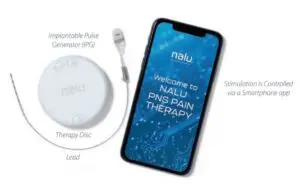
Carlsbad, California–based Nalu offers spinal cord stimulation and peripheral nerve stimulation (PNS) technology. It designed its offerings to treat patients with chronic neuropathic pain. It delivers gentle electrical pulses to the nervous system to modulate pain signals before they reach the brain.
“Peripheral nerve stimulation is an exciting field with a significant unmet patient need,” said Jim Cassidy, president, Neuromodulation, Boston Scientific. “Adding the highly differentiated Nalu Medical technology complements our existing therapies—including spinal cord stimulation, basivertebral nerve ablation and radiofrequency ablation—enabling us to deliver advanced pain relief options to a wider variety of patient populations.”
This marks the latest M&A play for Boston Scientific, which has remained busy on that front in recent years. The company completed its $1.18 billion acquisition of Silk Road Medical in September 2024, then closed the $3.7 billion buy of Axonics in November of last year.
To kick off 2025, the company entered another hot space — intravascular lithotripsy (IVL) — by agreeing to buy Bolt Medical in January. It completed that deal in March, then finalized a deal for intravascular ultrasound developer SoniVie in May. Earlier this month, the company closed an $88 million deal for Elutia’s bioenvelope technology as well.
More about Nalu Medical and the acquisition
The Nalu system includes a fully featured, battery-free, miniaturized implantable pulse generator (IPG). An externally worn therapy disc wirelessly powers the IPG and the user can control it through a smartphone-based app. The company says its IPG, despite its smaller size, delivers treatment capabilities similar to larger IPGs. Nalu’s system also has an expected service life of 18 years.
Earlier this year, the company received FDA clearance for expanded labeling of its peripheral nerve system to include whole-body MRI use. Its initial FDA clearance came in 2019. Nalu also launched a miniaturized wearable power source for the platform in August, then picked up $50 million in growth funding in September.
The company also added Raymond W. Cohen, the former founder and CEO of Axonics, to its board as chair this year. Cohen led Axonics through its acquisition by Boston Scientific last year.
Boston Scientific expects to complete the transaction in the first half of 2026. It anticipates more than $60 million in revenue for Nalu in 2025, with projections for year-over-year growth in excess of 25% in 2026.
The company expects an immaterial impact to adjusted EPS in 2026, followed by a slightly accretive impact in 2027 and an increasingly accretive impact thereafter. On a GAAP basis, it anticipates a more dilutive impact due to amortization expense and acquisition-related charges.

