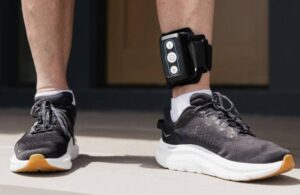
Salt Lake City–based BlueWind designed the enhanced Revi wearable device to deliver therapy more effectively. It aims to seamlessly support long-term symptom relief for patients with urgency urinary incontinence (UUI).
BlueWind designed Revi for implantation near the ankle during a single outpatient procedure. Patients initiate Revi therapy at their convenience by placing a lightweight, wireless wearable around their ankle once daily. This provides stimulation to the posterior tibial nerve, offering relief from urgency urinary incontinence (UUI) symptoms.
According to BlueWind, Revi is the first and only FDA-cleared iTNM system activated by an external wireless wearable for patients with UUI. Medtronic joined the market with FDA approval of its Altaviva tibial neuromodulation system for UUI in September. (Medtronic’s Altaviva system is activated before a patient goes home, with no daily intervention or manual adjustments required from the patient.)
BlueWind says its latest enhancement features a streamlined, easy-to-use design with a smarter, user-friendly interface. Still, the system retains its simple, three-button control.
Together, all the enhancements give patients greater confidence, control and convenience in managing their UUI, BlueWind says.
Revi offers personalized therapy that adapts to the user’s unique and changing UUI symptoms with adjustable, wearable control. BlueWind reports strong symptom relief, with 79% of patients achieving a ≥50% reduction in UUI. The company also touts 97% patient satisfaction and an excellent safety profile.
“We are proud to lead the next generation of technology for the treatment of urgency urinary incontinence,” said Kerry Nelson, CEO of BlueWind Medical. “BlueWind has been at the forefront of the field, pioneering implantable tibial neuromodulation for UUI. Our strong clinical evidence and our focus on patient comfort and satisfaction show that when patients can personalize their therapy, outcomes improve. The enhanced wearable continues that philosophy by making therapy easy to use, adaptable to each patient’s lifestyle, and supportive of long-term use. All of this helps patients achieve durable symptom relief and overall satisfaction.”