• Skip to primary navigation
  • Skip to main content
  • Skip to primary sidebar
  • Skip to footer

MassDevice

The Medical Device Business Journal — Medical Device News & Articles | MassDevice

  • Special Reports
  • Technologies
    • Artificial Intelligence (AI)
    • Cardiovascular
    • Orthopedics
    • Neurological
    • Diabetes
    • Surgical Robotics
  • Business & Finance
    • Wall Street Beat
    • Earnings Reports
    • Funding Roundup
    • Mergers & Acquisitions
    • Initial Public Offering (IPO)
    • Legal News
    • Personnel Moves
    • Medtech 100 Stock Index
  • Regulatory
    • Food & Drug Administration (FDA)
    • Recalls
    • 510(k)
    • Pre-Market Approval (PMA)
    • MDSAP
    • Clinical Trials
  • Resources
    • About MassDevice
    • Leadership in Medtech
    • Manufacturers & Suppliers Search
    • MedTech100 Index
    • Videos
    • Webinars
    • Whitepapers
    • Voices
    • In-Depth Coverage
    • Latest News
  • Attend DeviceTalks
    • Events
      • DeviceTalks Minnesota – May 4
      • DeviceTalks Boston – May 27–28
      • DeviceTalks West
      • DeviceTalks Tuesdays
    • DeviceTalks Podcast Network
      • DeviceTalks Weekly
      • AbbottTalks
      • Boston ScientificTalks
      • DeviceTalks AI
      • IntuitiveTalks
      • MedtechWOMEN Talks
      • MedtronicTalks
      • Neuro Innovation Talks
      • Ortho Innovation Talks
      • Structural Heart Talks
      • StrykerTalks
  • Advertise
  • Subscribe
Home » NIH research backs decontamination methods for N95 masks

NIH research backs decontamination methods for N95 masks

April 15, 2020 By Sean Whooley

N95 respirator face masks coronavirus
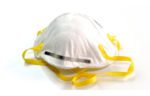
N95 respirator [Image from the FDA]
National Institutes of Health scientists have determined that N95 respirators can be decontaminated effectively and maintain functional integrity for up to three uses — getting mask supplies to last longer amid the coronavirus pandemic.

In a statement released today, NIH announced the validation of four decontamination methods after a study of the decontamination of small sections of N95 filter fabric exposed to SARS-CoV-2 (the virus that causes COVID-19).

Showing that decontamination can work matters because authorities are increasingly turning to it to boost the supply of N95 masks amid the pandemic. The U.S. Department of Defense, for example, has inked a $415 million contract to provide 60 Battelle Critical Care Decontamination Systems that use vaporized hydrogen peroxide (VHP) to decontaminate as many as 80,000 N95 respirator masks each day for reuse. Steris (NYSE:STE)  has an emergency use authorization (EUA) from the FDA for its own vaporized hydrogen peroxide system.

The new study, conducted with NIH’s Rocky Mountain Laboratories in Hamilton, Montana, tested decontamination in the form of VHP, 70 °C dry heat, ultraviolet light and 70% ethanol spray.

All four methods eliminated detectable viable virus from the fabric samples. Investigators also treated fully intact, clean respirators with the same decontamination methods to test reuse durability. After that, RML employees wore the masks for two hours to determine if fit remained and the face stayed sealed, while decontamination was repeated three times for each mask, using the same procedure.

The study found that ethanol spray damaged the integrity of the fit and seal after two sessions and do not recommend its use. UV and heat-treated respirators showed fit and seal problems after three decontaminations, suggesting they can be reused twice. Masks treated with VHP showed no failures, suggesting the potential for three-time reuse.

Normally, N95 respirators are designed for single-use, but the authors of the study concluded that VHP was the most effective decontamination method for allowing more uses, with no virus detected after a 10-minute treatment.

The authors of the study urge anyone decontaminating the N95 respirators to check the fit and seal after each reuse. Their findings are not yet peer-reviewed but are being shared to assist the public health response to coronavirus, according to the NIH statement.


Filed Under: Clinical Trials, Featured, Regulatory/Compliance, Respiratory Tagged With: coronavirus, COVID-19, National Institutes of Health (NIH), NIH

More recent news

  • Carlsmed names chief product and AI officer as it claims CMS reimbursements
  • Integra LifeSciences says Cincinnati plant flooding will cost millions
  • Mendaera rolls out handheld needle robot paired with Butterfly ultrasound probe
  • Edwards earns FDA approval for first-of-its-kind size-adjustable pediatric heart valve
  • Leading medical device experts and MDO launch Medtech Innovation Board

About Sean Whooley

Sean Whooley is a senior editor who mainly produces work for MassDevice, Medical Design & Outsourcing and Drug Delivery Business News. He received a bachelor's degree in multiplatform journalism from the University of Maryland, College Park. You can connect with him on LinkedIn or email him at [email protected].

Primary Sidebar

“md
EXPAND YOUR KNOWLEDGE AND STAY CONNECTED
Get the latest med device regulatory, business and technology news.

DeviceTalks Weekly

See More >
MDO ad
MDO ad

Footer

MASSDEVICE MEDICAL NETWORK

DeviceTalks
Drug Delivery Business News
Medical Design & Outsourcing
Medical Tubing + Extrusion
Drug Discovery & Development
Pharmaceutical Processing World
MedTech 100 Index
R&D World
Medical Design Sourcing

DeviceTalks Webinars, Podcasts, & Discussions

Attend our Monthly Webinars
Listen to our Weekly Podcasts
Join our DeviceTalks Tuesdays Discussion

MASSDEVICE

Subscribe to MassDevice E-Newsletter
Advertise with us
About
Contact us

Copyright © 2026 · Arrowfly LLC and its licensors. All rights reserved.
The material on this site may not be reproduced, distributed, transmitted, cached or otherwise used, except with the prior written permission of Arrowfly.

Privacy Policy