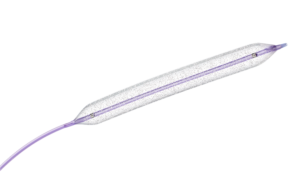
The IN.PACT AV Access post-approval study demonstrated strong safety and effectiveness for the DCB in the treatment of arteriovenous fistula (AVF) stenoses in patients with end-stage kidney disease on dialysis. The study sought to expand real-world experience through evaluation of the DCB across 17 U.S. clinical sites.
Investigators presented 12-month findings at the Society of Interventional Radiology (SIR) Annual Scientific Meeting in Toronto.
Medtronic said it intentionally designed the post-approval study as a confirmatory extension to further strengthen its evidence base. It wanted to evaluate In.Pact AV’s performance in a population with high comorbidity burden.
“Real-world evidence is essential to understanding how therapies perform outside of controlled trial settings,” said Dr. Sanjay Misra, professor of radiology at Mayo Clinic and principal investigator of the study. “The IN.PACT AV post-approval study provides important confirmation that drug-coated balloon treatment can deliver consistent, safe outcomes for AV fistula maintenance in everyday clinical practice in this complex dialysis population.”
Key outcomes from the Medtronic DCB study
Medtronic reported that the primary cohort in the DCB study mostly presented AV fistulas that were brachiocephalic (51.6%). Brachiobasilic (20.8%) AV fistulas followed, then radiocephalic (20.8%). Most common lesion locations ended up in the cephalic arch (25.8%) and venous outflow (25.2%). The study identified 59.5% de novo lesions and 40.5% non-stented restenotic lesions.
According to Medtronic, target lesion primary patency at 12 months came in at 70.2%. Access circuit primary patency at 12 months was 52.6%. Target lesion and access circuit patency rates aligned with the 12-month outcomes observed for the DCB in its pivotal randomized controlled trial and proved better than PTA rates.
Investigators reported fewer than one reintervention per patient required through 12 months. That comes in below the average of 1.5 reintervention procedures per year.
The study also recorded a serious infection rate of 13.4% at 12 months, below literature reports ranging from 19% to 23%.
“These strong real-world data are an important contribution to the body of clinical data supporting the role of the IN.PACT AV DCB for AV fistula maintenance,” said David Moeller, SVP and president of Peripheral Vascular Health at Medtronic. “We are proud to lead the industry in generating long-term clinical evidence in this space and grateful to improve durable AV fistula patency for patients with ESKD requiring dialysis, reducing their need for reinterventions.”