Findings demonstrated less than 1% statistical bias, with no clinically meaningful skin pigmentation-related discrepancies and no occult hypoxemic events among Black or Hispanic patients, and in only one Caucasian patient overall. Results suggest equitable monitoring performance for the pulse oximetry platform.
Irvine, California-based Masimo — which is set to be acquired by Danaher in a $10 billion deal — said the results add to previously published evidence backing its pulse oximetry technology across all skin tones. The company plans to share full results for its INSPIRE study evaluating SET in adults later this year.
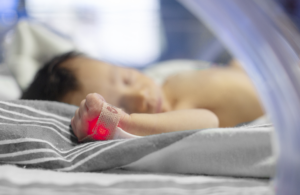
In the NeoPODS study evaluating SET pulse oximetry, investigators evaluated SET in hospitalized NICU patients. The study featured rigorous technical methodology with a primary outcome of mean bias between paired, simultaneously measured SpO2 and SaO2 values. They had a secondary outcome of understanding how that bias differed by skin tone.
A look at the findings
Researchers enrolled patients between July 2022 and July 2025. Hospitalized newborns registered up to 10 days old, of at least 26 weeks gestational age, with an indwelling arterial catheter and at least one clinically indicated arterial blood draw.
Masimo RD SET Neo sensors connected to its Radical-7 Pulse CO-Oximeters and Root monitoring platforms. The technology continuously recorded SpO2 data before, during, and after arterial blood gas (ABG) sampling.
From among 100 newborns enrolled, 136 paired SpO2-SaO2 readings collected from 70 patients met the technical criteria for inclusion in the final analysis. Patient mean gestational age registered at 28.4 weeks, with a median gestational weight of 1085 grams. As identified by parents, the study included 40% Black patients and 23% Hispanic patients.
Researchers found that overall mean bias between noninvasive SpO2 and invasive SaO2 was -0.98% 2.80% (95% confidence interval, -1.45% to -0.52%). They label this as not a clinically significant amount. It means taht, on average, SpO2 slightly underestimated, not overestimated, SaO2.
In skin pigmentation, researchers observed no statistically or clinically significant differences in mean SpO2-SaO2 bias.
The authors concluded that the study provides reassurance on equitable and accurate care in the NICU for this device and population.
Commentary from Masimo officials and study investigators
Dr. Daniel Cantillon, chief medical officer at Masimo, said:
“Concerns about occult hypoxemia in vulnerable neonates, especially with darker skin tones, prompted this large, investigator-initiated and NIH funded real-world study applying rigorous scientific methods. Once again, we’re highly encouraged to see Masimo’s RD SET technology demonstrate less than 1% overall bias without occult hypoxemic events among Black or Hispanic infants. This is consistent with the recently published INSPIRE feasibility study results among critically ill adults in the ICU under similarly challenging conditions. However, as the authors note, these findings cannot be extrapolated to other pulse oximeter manufacturers untested on critically ill patients under real-world conditions.”
Dr. Heather Siefkes, principal investigator of NeoPODS and associate professor at the University of California Davis Children’s Hospital, said:
“In this prospective study of critically ill newborns with tightly paired measurements, we found that pulse oximetry only slightly underestimated arterial oxygen saturation overall and did not demonstrate clinically meaningful differences across skin pigmentation. Bias varied with oxygen saturation, with a tendency toward overestimation at lower SaO2 levels; however, this pattern was not modified by skin pigmentation. Our findings highlight the importance of continued age-, disease-, and device-specific evaluation of pulse oximeter performance.”