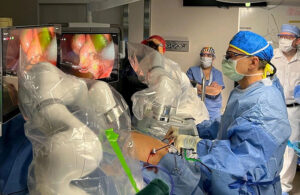
The latest MSS clearance is for laparoscopic cholecystectomies in pediatric patients ages 12 and older within a BMI range of 20-34 kg/m².
“For pediatric patients, minimizing surgical trauma is critical — less pain, faster recovery, and fewer scars all contribute to better long-term physical and emotional outcomes,” said Dr. Miguel Guelfand, professor and head of pediatric general and thoracic surgery at Cleveland Clinic Children’s.

“This case represents a major step forward in our ongoing mission to advance minimally invasive and robotic surgery in neonates and children,” Guelfand said on LinkedIn after the first surgery. “The MARS system combines the advantages of magnetic retraction with robotic control, allowing greater visualization and dexterity through less incisions — a true paradigm shift for pediatric patients. … This is only the beginning — and a glimpse into the future of pediatric MIS and robotic surgery.”
Mountain View, California–based Levita launched MSS in 2016. MSS is comprised of a laparoscopic magnetic grasper, a grasper tip that attaches to tissue inside the body, and an external magnetic controller that attracts the grasper tip to manipulate the attached tissue.

The latest MSS clearance “marks a defining moment for the future of surgery,” Levita Magnetics founder, CEO and President Dr. Alberto Rodriguez-Navarro said in a statement shared with MassDevice ahead of the announcement.

Special Report: Get your free download of the MassDevice Surgical Robotics Special Report
In September, Levita announced the world’s first gall bladder surgery using an autonomous surgical camera and in recent years has been researching the use of its technology with artificial intelligence, augmented reality and even other surgical robotics systems.