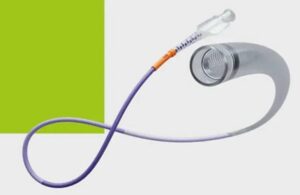
The medtech giant also launched the InnerGlide 7 delivery aid, rounding out the newest additions to its aspiration-first stroke portfolio.
J&J MedTech said the devices complete the CereGlide family, which includes the CereGlide 71, CereGlide 92, along with theProwler EX and EmboTrap III systems. The devices help physicians reach and remove distal clots more consistently, the company says. They also help to simplify procedural decisions and support performance across a range of ischemic stroke cases.
“We designed this multi-axial system to address procedural challenges physicians face when treating stroke,” said Christian Cuzick, Worldwide President, Neurovascular, Johnson & Johnson MedTech. “With this expanded portfolio, we’re simplifying decisions, enhancing consistency across device sizes, and reinforcing our commitment to helping improve patient outcomes.”
Both new CereGlide catheters feature a proprietary, variable-stiffness construction for flexible distal navigation and supportive proximal control. The company designed them to integrate seamlessly into existing neurointerventional workflows.
J&J MedTech said its devices offer hydrophilic coating for reduced friction in tortuous anatomy, plus radiopaque tip markers for fluoroscopic visibility. They also have easy trackability with TruCourse technology.
InterGlide 7, meanwhile, supports the advancement of large-bore catheters like CereGlide 71 to distal clot locations. It has a hydrophilic-coated shaft, 1.5 cm soft distal tip and compatibility with 0.024″ guidewires. This offers added control and support during complex device delivery.
“Reaching the M2 segment with large-bore aspiration systems can be technically demanding,” said Dr. Ameer E. Hassan of the Neuroscience Institute, Valley Baptist Medical Center, Harlingen, Texas. “InnerGlide 7 provides the additional support needed to consistently deliver CereGlide 71 into more distal targets with smoother navigation and less resistance. I am a firm believer in delivery catheter technology like Innerglide.”