European approval comes about six months after the stent picked up FDA approval.
The company labeled Viabahn Fortegra the first device for the treatment of deep venous disease in the inferior vena cava (IVC), iliac and iliofemoral veins. It’s the latest addition to the Viabahn device family, engineered to treat patients with deep venous disease.
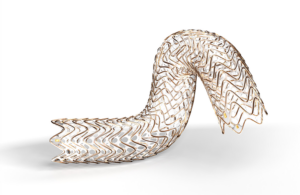
Viabahn Fortegra features an open-structure, self-expanding, wire-wound nitinol frame and an expanded polytetrafluoroethylene (ePTFE) polymer lattice. Gore designed it for comfortability, strength and fracture resistance. The company says its novel technology helps to provide an optimal balance. It allows the stent to conform to the natural anatomy while providing compression resistance throughout the entire device. Featuring a wide range of sizes, the stent can work in a wide range of patient anatomies.
Gore said study data backed Fortegra as both a safe and effective system for its indicated use in deep venous disease. Among patients who experienced pain at baseline, 81% showed improvement in pain at 12 months. Significant improvements also came across validated quality of life measures and clinical severity measures.
Commentary from users of the Gore Viabahn Fortegra stent
Dr. Stephen Black, professor of venous surgery at Guy’s and St Thomas’ Hospital (London) and global primary investigator, said:
“The Fortegra venous stent represents a significant advancement in the treatment of patients with the most difficult-to-treat venous obstructive pathology; occlusion of the inferior vena cava and iliac veins. Patients will benefit from a device that is specifically designed for this pathology and its unique anatomic and physiologic challenges, including preservation of optimal flow dynamics through reconstruction of the iliocaval confluence and the unique properties of physiological movement in the inferior vena cava.”
Dr. Gerry O’Sullivan, interventional radiologist, Galway (Ireland) University Hospital, said:
“What is particularly important about this evidence is that it reflects the full thrombotic spectrum we treat in practice—acute, subacute, and post-thrombotic syndrome. This prospective study demonstrated conclusively that patients benefitted from a device that is specifically designed for patients with complex cases involving the inferior vena cava, iliac veins and inflow veins. Results showed clinically meaningful benefits, alongside improvements in patient quality of life and clinical severity measures.”

