• Skip to primary navigation
  • Skip to main content
  • Skip to primary sidebar
  • Skip to footer

MassDevice

The Medical Device Business Journal — Medical Device News & Articles | MassDevice

  • Special Reports
  • Technologies
    • Artificial Intelligence (AI)
    • Cardiovascular
    • Orthopedics
    • Neurological
    • Diabetes
    • Surgical Robotics
  • Business & Finance
    • Wall Street Beat
    • Earnings Reports
    • Funding Roundup
    • Mergers & Acquisitions
    • Initial Public Offering (IPO)
    • Legal News
    • Personnel Moves
    • Medtech 100 Stock Index
  • Regulatory
    • Food & Drug Administration (FDA)
    • Recalls
    • 510(k)
    • Pre-Market Approval (PMA)
    • MDSAP
    • Clinical Trials
  • Resources
    • About MassDevice
    • Leadership in Medtech
    • Manufacturers & Suppliers Search
    • MedTech100 Index
    • Videos
    • Webinars
    • Whitepapers
    • Voices
    • In-Depth Coverage
    • Latest News
  • Attend DeviceTalks
    • Events
      • DeviceTalks Minnesota – May 4
      • DeviceTalks Boston – May 27–28
      • DeviceTalks West
      • DeviceTalks Tuesdays
    • DeviceTalks Podcast Network
      • DeviceTalks Weekly
      • AbbottTalks
      • Boston ScientificTalks
      • DeviceTalks AI
      • IntuitiveTalks
      • MedtechWOMEN Talks
      • MedtronicTalks
      • Neuro Innovation Talks
      • Ortho Innovation Talks
      • Structural Heart Talks
      • StrykerTalks
  • Advertise
  • Subscribe
Home » Fractyl says its single catheter treatment maintained most GLP-1 weight loss

Fractyl says its single catheter treatment maintained most GLP-1 weight loss

July 15, 2026 By Skyler Rivera

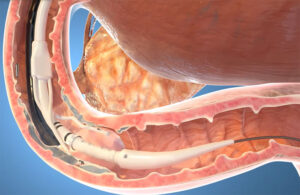
An illustration of Fractyl Health's Revita targeting the duodenal mucosa.
Fractyl Health’s Revita targets the duodenal mucosa in an endoscopic ablation procedure. [Illustration courtesy of Fractyl Health]
Fractyl Health (NASDAQ: GUTS) reported randomized clinical trial results demonstrating that patients maintained up to 84% of GLP-1-induced weight loss with its Revita technology one year after discontinuing GLP-1 medication, the company announced today.

“The success of GLP-1 medicines has created a new unsolved problem: what happens when patients stop. Most do stop eventually, whether because of cost, side effects, or simply not wanting to inject a drug for the rest of their lives. When they stop, the weight most often comes back,” Fractyl co-founder and CEO Dr. Harith Rajagopalan said in a news release. 

Fractyl’s REMAIN-1 Midpoint Cohort study is a randomized, double-blind, sham-controlled proof-of-concept study evaluating its Revita DMR System for weight management in adults with obesity one year after discontinuing GLP-1 therapy following at least 15% total body weight loss using tirzepatide. 

Medical Design & Outsourcing: Wings help this device take on type 2 diabetes in the duodenum

The Revita system consists of a console containing proprietary software and technology, a single-use lineset and a single-use catheter for hydrothermal ablation. Revita targets the duodenal mucosa (first 25 cm of the small intestine beyond the stomach) in a minimally invasive endoscopic ablation procedure. It ablates damaged tissue to enable the regeneration of healthier duodenal mucosa that could restore normal metabolic regulation.

Revita received FDA breakthrough device designation in 2021.
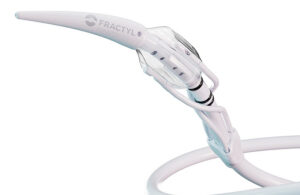
A photo of Revita's endoscopic catheter.
The Revita system includes a single-use endoscopic catheter for hydrothermal ablation. [Image courtesy of Fractyl Health]
“This [technology] addresses the most significant unmet need in obesity today, durable weight maintenance after stopping GLP-1 therapy,” Rajagopalan said on an investor call. “The data shows something many people believe was not possible: that durable drug-free weight maintenance can be achieved with a single outpatient endoscopic procedure.”

In a full modified intention-to-treat population, participants who received complete duodenal ablation maintained approximately 81% of GLP-1-induced weight loss at one year compared to 48% in sham participants, the company reported. 

The results were positive in patients who lost more weight during GLP-1 therapy. In an optimized patient population with patients who had higher GLP-1 run-in weight loss (≥17.5%), Revita patients maintained 84% of GLP-1-induced weight loss at one year compared with 46% in the sham population.  

“These results are consistent with the view that patients at greatest need may derive the greatest benefit from Revita due to their higher propensity for weight regain after GLP-1 discontinuation,” the company said in a press release. 

Related: Terrestrial Bio doses first patients in GLP-1 patch trial

Throughout the study, no device- or procedure-related serious adverse events occurred, the company reported. Overall device-related treatment-emergent adverse events were limited to abdominal discomfort, sore throat, nausea and dry mouth, Rajagopalan said, and were comparable between the Revita and sham populations. These events resolved within two days, he said.

Fractyl co-founder and CEO Dr. Harith Rajagopalan [Photo courtesy of Fractyl Health]
“Revita is like LASIK for obesity and it targets the underlying cause of disease with a single outpatient procedure rather than relying on chronic medication,” Rajagopalan said. “This approach is particularly valuable in the post GLP-1 setting where millions of patients are looking to maintain their weight loss without staying on therapy long term.”

Fractyl’s next benchmarks for Revita are topline six-month randomized data from its REMAIN-1 pivotal trial expected in early quarter four 2026 and a potential FDA de novo marketing application submission in late quarter four 2026. 

“We see room for even further profile optimization in the future as we continue to develop our technology,” Rajagopalan said.


Filed Under: Business/Financial News, Clinical Trials, Diabetes, Endoscopic, Featured, News Well, Research & Development, Surgical, Weight loss Tagged With: Ablation, Fractyl, Fractyl Health, GLP-1s, weight loss

More recent news

  • Cooper Companies continues to see activist pressure to sell divisions, replace CEO
  • Cordis earns FDA nod for Selution SLR drug-eluting balloon
  • Siemens Healthineers links with Novo to advance liver fibrosis blood test
  • GE HealthCare rolls out AI software for predicting care bottlenecks
  • Wandercraft’s self-balancing Eve exoskeleton begins US launch

About Skyler Rivera

Skyler Rivera is an associate editor at Arrowfly, covering medical device industry news and technology at MassDevice and Medical Design & Outsourcing. She began her career covering sports at The Athletic and MLB before transitioning to medical writing at Edwards Lifesciences. Based in Southern California, she holds a master's degree in science writing from Johns Hopkins University and a bachelor’s in broadcast journalism from Syracuse University. Connect with her on LinkedIn or email at [email protected].

Primary Sidebar

Cart

“md
EXPAND YOUR KNOWLEDGE AND STAY CONNECTED
Get the latest med device regulatory, business and technology news.

DeviceTalks Weekly

See More >
MDO ad
MDO ad

Footer

MASSDEVICE MEDICAL NETWORK

DeviceTalks
Drug Delivery Business News
Medical Design & Outsourcing
Medical Tubing + Extrusion
Drug Discovery & Development
Pharmaceutical Processing World
MedTech 100 Index
R&D World
Medical Design Sourcing

DeviceTalks Webinars, Podcasts, & Discussions

Attend our Monthly Webinars
Listen to our Weekly Podcasts
Join our DeviceTalks Tuesdays Discussion

MASSDEVICE

Subscribe to MassDevice E-Newsletter
Advertise with us
About
Contact us

Copyright © 2026 · Arrowfly LLC and its licensors. All rights reserved.
The material on this site may not be reproduced, distributed, transmitted, cached or otherwise used, except with the prior written permission of Arrowfly.

Privacy Policy