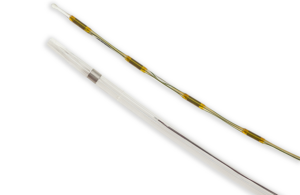
EKOS provides minimally invasive, ultrasound-facilitated, catheter-directed thrombolysis (USCDT). It delivers a low dose of clot-dissolving medication directly to the blood clot, using ultrasound energy to facilitate the dispersion of the medication deep into the clot to dissolve it. EKOS’ ultrasound technology accelerates thrombolysis by minimizing the time it takes to treat a patient. It lowers the necessary thrombolytic dose, which can lower the risk of bleeding.
The HI-PEITHO trial — launched in 2021 — evaluated EKOS in patients with intermediate-risk pulmonary embolism (PE). It met its composite primary endpoint, Boston Scientific said. Ekos plus anticoagulation demonstrated superiority to the current standard of care (anticoagulation alone) for treating acute PE.
Investigators presented findings at the American College of Cardiology’s Annual Scientific Session & Expo (ACC 2026) in New Orleans. They simultaneously published outcomes in The New England Journal of Medicine.
“The HI-PEITHO trial evaluated clear, clinically meaningful endpoints using rigorous patient enrollment criteria and demonstrated a definitive impact with the EKOS system over the standard of care for treating acute PE,” said Dr. Michael R. Jaff, VP and chief medical officer, Vascular Therapies, Boston Scientific. “For the first time, we have robust randomized clinical trial data available to inform treatment decisions by interventionalists and referring physicians and support consideration of EKOS plus anticoagulation as a first-line therapy.”
More on the findings from Boston Scientific
HI-PEITHO enrolled 544 patients with intermediate-risk PE across 59 sites in the U.S. and Europe. Boston Scientific jointly led the study in partnership with The PERT Consortium and the University Medical Center of Mainz (Germany). They worked in collaboration with the PEITHO International Study Network.
The company expects the study to follow patients out to one year post-procedure.
Boston Scientific said its study met the primary endpoint of PE-related mortality, non-fatal hemodynamic cardiorespiratory decompensation or collapse and non-fatal symptomatic recurrence of PE within seven days. EKOS plus anticoagulation (4%) demonstrated superiority to anticoagulation alone (10.3%). This resulted in a 61%. reduction in primary endpoint events.
Data from patients treated with EKOS also demonstrated a lower rate of cardiorespiratory decompensation or collapse (3.7% vs. 10.3%). In these cases, the inability of the heart to maintain adequate blood flow can lead to serious complications, often requiring emergency intervention.
Boston Scientific reported no episodes of bleeding within the brain through 30 days as well.
“The data presented today offer clinicians a greater understanding of the impact of intervention via ultrasound-facilitated catheter-directed thrombolysis with the EKOS system,” said Dr. Stavros Konstantinides, principal investigator of the HI-PEITHO trial and medical director, Center for Thrombosis and Hemostasis, University Medical Center Mainz, Germany. “These highly anticipated findings underscore the clinical efficacy for patients treated with this therapy, while also demonstrating that treatment was not accompanied by an increased risk of major bleeding and offered the added benefit of a shorter hospital stay compared to patients treated with anticoagulation alone.”