Becton, Dickinson and Company (BD) issued a nationwide recall for specific lots of BD Intraosseous Vascular Access System Needle Sets after reports of four patient deaths.
The FDA classified the recall as a Class I recall on August 17. A Class I recall is the agency’s most serious type of recall, in which use of the device without correction may cause serious injuries or death.
BD recalled the products after reports of users experiencing difficulty removing the obturator (stylet) after placement of the needle set, according to the company’s announcement. The device developer said affected lots were “manufactured with out-of-tolerance dimensions.”
“Based on complaint reports, bench testing completed by BD and clinical observations, this may occur when pulling back on the drill during the insertion or when failing to pull straight back with the powered driver or incorrectly rotating or trying to unscrew the obturator,” the company said in a letter to customers. “These actions allow the rotation and locking of the obturator-needle hub interface for specific lots of the product with out-of-tolerance dimensions.”
Intraosseous vascular access systems involve inserting a specialized needle into the patient’s bone to deliver fluids and medication, usually in emergency, trauma and resuscitation situations when intravenous access is delayed or not feasible.
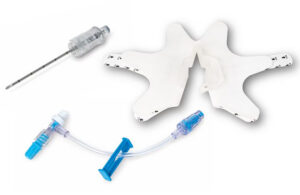
D015551NK (pictured here) are included in the recall. [Photo courtesy of BD]
Through June 2026, BD received 75 complaints and reported 45 serious injury reports to the agency. The company reported four deaths in which the inability to remove the obturator occurred during resuscitation efforts for out-of-hospital cardiac arrests, the FDA said.
BD distributed affected lots from September 30, 2024 through June 12, 2026. The company issued letter, advising customers and distributors to discontinue using affected needle sets immediately and to destroy the affected product.
The company has implemented corrective and preventive actions to correct the root cause of the issue and reduce the likelihood of recurrence, according to the recall.
This story was published on August 3, 2026 and updated on August 18, 2026, to reflect the FDA’s Class I recall classification.