• Skip to primary navigation
  • Skip to main content
  • Skip to primary sidebar
  • Skip to footer

MassDevice

The Medical Device Business Journal — Medical Device News & Articles | MassDevice

  • Special Reports
  • Technologies
    • Artificial Intelligence (AI)
    • Cardiovascular
    • Orthopedics
    • Neurological
    • Diabetes
    • Surgical Robotics
  • Business & Finance
    • Wall Street Beat
    • Earnings Reports
    • Funding Roundup
    • Mergers & Acquisitions
    • Initial Public Offering (IPO)
    • Legal News
    • Personnel Moves
    • Medtech 100 Stock Index
  • Regulatory
    • Food & Drug Administration (FDA)
    • Recalls
    • 510(k)
    • Pre-Market Approval (PMA)
    • MDSAP
    • Clinical Trials
  • Resources
    • About MassDevice
    • Leadership in Medtech
    • Manufacturers & Suppliers Search
    • MedTech100 Index
    • Videos
    • Webinars
    • Whitepapers
    • Voices
    • In-Depth Coverage
    • Latest News
  • Attend DeviceTalks
    • Events
      • DeviceTalks Minnesota – May 4
      • DeviceTalks Boston – May 27–28
      • DeviceTalks West
      • DeviceTalks Tuesdays
    • DeviceTalks Podcast Network
      • DeviceTalks Weekly
      • AbbottTalks
      • Boston ScientificTalks
      • DeviceTalks AI
      • IntuitiveTalks
      • MedtechWOMEN Talks
      • MedtronicTalks
      • Neuro Innovation Talks
      • Ortho Innovation Talks
      • Structural Heart Talks
      • StrykerTalks
  • Advertise
  • Subscribe
Home » Abbott: Study shows neuromod systems greatly reduce pain-related healthcare visits

Abbott: Study shows neuromod systems greatly reduce pain-related healthcare visits

January 27, 2026 By Skyler Rivera

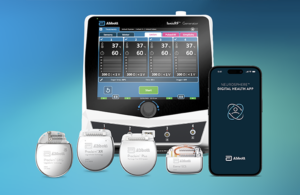
This marketing image shows Abbott's suite of neuromodulation devices that use BurstDR spinal cord stimulation to treat chronic pain.
Abbott offers a suite of neuromodulation devices that use BurstDR spinal cord stimulation to treat chronic pain. [Image courtesy of Abbott]
Abbott’s (NYSE: ABT) neuromodulation systems can significantly reduce pain-related healthcare visits for people living with chronic pain, according to five-year data announced by the company.

In addition, Abbott also received an FDA approval related to MRI compatibility in its chronic pain management portfolio.

Abbott’s BurstDR spinal cord stimulation therapy reduced pain-related health care visits, both in the short- and long-term, by an average of 75% after five years of use. The company’s dorsal root ganglion system, used to treat several chronic pain conditions, also saw an average of 73% reduction in pain-related healthcare visits among patients who reached the five-year mark with the implant, according to data released Jan. 23 by Abbott.

Chronic pain affects more than 1 in 5 adults in the United States, costing patients an average of over $8,000 annually in medical expenditures, according to a 2021 study mentioned in Abbott’s announcement. Americans living with chronic pain lose over $2,900 in productivity each year with repeat office visits, physical therapy, medication and repeat diagnostic imaging.

“With spinal cord stimulation, we can dramatically reduce the burden placed on patients who suffer from chronic pain and help them return to a level of normality that many of them believe they have lost,” said lead author on the study, Dr. Timothy Deer, CEO of the Spine and Nerve Centers of the Virginias in Charleston, West Virginia.

Abbott’s BurstDR spinal cord stimulation technology delivers mild electrical pulses aimed at neutralizing pain signals as they travel from the spinal cord to the brain, changing how patients experience pain and limiting the “tingling” sensation of tonic stimulation. Patients using Abbott’s system reported sustained improvements in pain relief and physical function, reductions in pain catastrophizing (a potentially debilitating mental dwelling on pain) to a normal, healthy level beginning six months post-implant and maintained over five years of use.

Abbott offers a suite of neuromodulation devices that use BurstDR spinal cord stimulation to treat chronic pain.

Abbott’s Proclaim dorsal root ganglion (DRG) system is used to treat patients with chronic lower extremity pain, complex regional pain syndrome Type 1 and 2, peripheral neuropathy, back pain and failed back surgery syndrome. Proclaim delivers low-energy stimulation to the dorsal root ganglion nerves along the spine, interrupting the pain signal before it reaches the spinal cord and brain, impacting how the patient experiences pain.

After announcing the new clinical data at the North American Neuromodulation Society 2026 Annual Meeting in Las Vegas, Abbott also announced that it received FDA approval for prone MRI scans with its chronic pain system portfolio. Now, new and existing patients with an Abbott neurostimulation system, like Proclaim, will be able to undergo prone MRI imaging, in addition to the previously approved supine scan. In the statement, Abbott said nearly 84% of people with spinal cord stimulators will need at least one MRI within five years of implantation.

With this promising new data, Abbott said it will continue to invest in research to improve neuromodulation therapies. The goal is to better understand how patients experience and communicate pain and further individualize its approach to chronic pain management.


Filed Under: Clinical Trials, Featured, Neurological, Neuromodulation/Neurostimulation, Pain Management Tagged With: Abbott

More recent news

  • Citi downgrades Boston Scientific as cyberattack recovery compounds competitive pressure
  • Autonomix taps former Medtronic FDA counsel head for board of directors
  • Medtronic strengthens robotic surgery position with Cornerstone deal, analysts say
  • Science Corp. names president as it looks to roll out vision-restoring implant
  • Mindray looks to fill hospital ventilator gap left by Philips’ exit

About Skyler Rivera

Skyler Rivera is an associate editor at Arrowfly, covering medical device industry news and technology at MassDevice and Medical Design & Outsourcing. She began her career covering sports at The Athletic and MLB before transitioning to medical writing at Edwards Lifesciences. Based in Southern California, she holds a master's degree in science writing from Johns Hopkins University and a bachelor’s in broadcast journalism from Syracuse University. Connect with her on LinkedIn or email at [email protected].

Primary Sidebar

Cart

“md
EXPAND YOUR KNOWLEDGE AND STAY CONNECTED
Get the latest med device regulatory, business and technology news.

DeviceTalks Weekly

See More >
MDO ad
MDO ad

Footer

MASSDEVICE MEDICAL NETWORK

DeviceTalks
Drug Delivery Business News
Medical Design & Outsourcing
Medical Tubing + Extrusion
Drug Discovery & Development
Pharmaceutical Processing World
MedTech 100 Index
R&D World
Medical Design Sourcing

DeviceTalks Webinars, Podcasts, & Discussions

Attend our Monthly Webinars
Listen to our Weekly Podcasts
Join our DeviceTalks Tuesdays Discussion

MASSDEVICE

Subscribe to MassDevice E-Newsletter
Advertise with us
About
Contact us

Copyright © 2026 · Arrowfly LLC and its licensors. All rights reserved.
The material on this site may not be reproduced, distributed, transmitted, cached or otherwise used, except with the prior written permission of Arrowfly.

Privacy Policy