
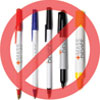
MASSDEVICE ON CALL — Gift ban: Mass. House votes to repeal law regulating company’s gifts to doctors. The Mass. House of Representatives voted to overturn a law that requires that medical device and pharmaceutical companies disclose certain gifts to physicians while banning other gifts altogether.
Commonwealth lawmakers yesterday voted 128-22 in their state budget debate to end the law.
The so-called "gift ban" legislation has been on the books in the Bay State since 2008, but critics charge that the law is bad for business.
The regulations contain sweeping limits and outright bans on gifts to physicians, including meals, tickets and even pens. The law also requires companies to report to the Mass. Dept. of Public Health all gifts worth more than $50 to physicians, hospitals, nursing homes, pharmacists and other health care providers.
The leaders of medical companies have complained that the law is an inconvenience while some business owners, such as restaurateurs, said the law causes a drop in revenues. Restaurant advocates said last summer that since the gift ban went into effect, device and drug companies have shown little interest in catering, cutting deep swaths out of their function revenue.
In July 2010, the Mass. legislature made its first attempt at repealing the ban just as mandated reports of gift giving began to become public. The elimination of the gift ban was included in economic development legislation that cleared the House 145-4, but the provision did not make it into the final bill.
The renewed debate entered the 2010 gubernatorial race and Governor Deval Patrick, said that the law was never meant for medical device companies while campaigning in October.
AARP comes out against gift ban repeal citing drug pricing. The Massachusetts state director of the American Association of Retired Persons, Deborah Banda, released a statement saying "AARP is dismayed by the House’s action today to repeal the state’s prescription drug company gift ban, which restricts drug company marketing practices, like free lunches for doctors, that drive up prescription prices for consumers."
Johnson & Johnson and Synthes reach merger deal. Johnson & Johnson (NYSE:JNJ) and Synthes Inc. (SWX:SYST.VX) entered into an acquisition agreement through which Johnson & Johnson will acquire Synthes for CHF159 ($180.15) per share, or CHF18.80 billion ($21.3 billion). Synthes and the DePuy companies of Johnson & Johnson together will comprise the largest business within its medical devices and diagnostics business, the companies said in a joint statement. The companies said the deal is expected to close during the first half of 2012. Synthes said the company will report its earnings from the first quarter of 2011 today.
Johnson & Johnson’s bid to revive the fortunes of its DePuy subsidiary with the buyout has so far failed to win over Wall Street. Synthes shares have also showed littled reaction.
Covidien board member Yamada steps down. Covidien plc (NYSE:COV) board member Dr. Tadataka Yamada tendered his resignation from the company’s board of directors. Yamada chose to leave the board "due to his desire to devote more of his time to other work opportunities," the company said in a filing with the Securities & Exchange Commission. Yamada’s resignation, which was effective April 25, did not involve any disagreement with the other board members or with the company’s management, the company said.
Acacia Subsidiary and JNJ’s Cordis settle patent dispute. Acacia Research Corp.’s (NSDQ:ACTG) EVM Systems LLC subsidiary entered into a settlement agreement with Johnson & Johnson’s Cordis Corp. regarding patents for shape memory metal medical instruments, Acacia said today. The agreement resolves litigation that was pending in the Eastern District of Texas. Acacia’s subsidiaries partner with inventors and patent owners, license the patents to corporate users, and share the revenue; the subsidiaries control over 170 patent portfolios from in a wide variety of industries, according to the company.